LPL Betting Guide: Markets, Venues & Tips for the Lanka Premier League
A complete, Sri-Lanka-first guide to betting the Lanka Premier League — the format, the venues, every market worth a stake, worked LKR examples and the conditions that quietly move the odds.

The Lanka Premier League is the one T20 competition where Sri Lankan punters hold a real edge — you know the grounds, the local players and how a Premadasa surface behaves under lights better than any overseas trader pricing the game. This guide turns that home knowledge into smarter bets. It walks through the tournament format, the venues, every market worth your money and the conditions that move prices, all with rupee examples. You can open the live Lanka Premier League markets in another tab and follow along.
- Teams
- 5 city-based franchises
- Format
- Double round-robin + playoffs
- Main venues
- R. Premadasa (Colombo), Pallekele (Kandy), Dambulla
- Window
- Usually November–December
- Organiser
- Sri Lanka Cricket (SLC)
- Currency for bets
- LKR (₨)
How the LPL works
Five city franchises are built each season through a player draft rather than an IPL-style money auction, which keeps the sides fairly even and the outright market open longer than you might expect. Teams play a double round-robin — everyone meets everyone twice — before the top four move into the playoffs and final. That is roughly two dozen matches inside a month, so form, fatigue and travel between grounds all become live betting factors as the tournament wears on.
The five franchises
Franchise names and squads shift year to year, but the league is built around five cities: Colombo, Kandy, Galle, Jaffna and Dambulla. Jaffna have been the benchmark side across editions, so they usually open as outright favourites; the others are separated by a couple of marquee overseas signings and the strength of their local core. When you weigh the outright market, look past the badge to two things: the death-overs bowling and whether the top three can bat through a full 20 overs.
Venues and how the pitches bet
Venue is the first thing a sharp LPL bettor checks, because the three main grounds play nothing alike:
| Venue | City | How it plays | Betting angle |
|---|---|---|---|
| R. Premadasa | Colombo | Slower surface that grips for spin as the match goes on | Spinners' markets pay; chases can stall, so a defended total is live |
| Pallekele | Kandy | Truer bounce, help for pace in the evening, higher scoring | Lean to Over on totals; back seamers for top bowler |
| Rangiri Dambulla | Dambulla | Batting-friendly and high-scoring | Overs and big-hitting sides; totals lines sit higher |
The other constant is evening dew. Once it settles, the ball skids on and bowlers struggle to grip it, which is why the side chasing is so often the smart-money pick after the toss.
LPL betting markets explained
A dozen markets hang off every LPL match. These are the ones that carry the value:
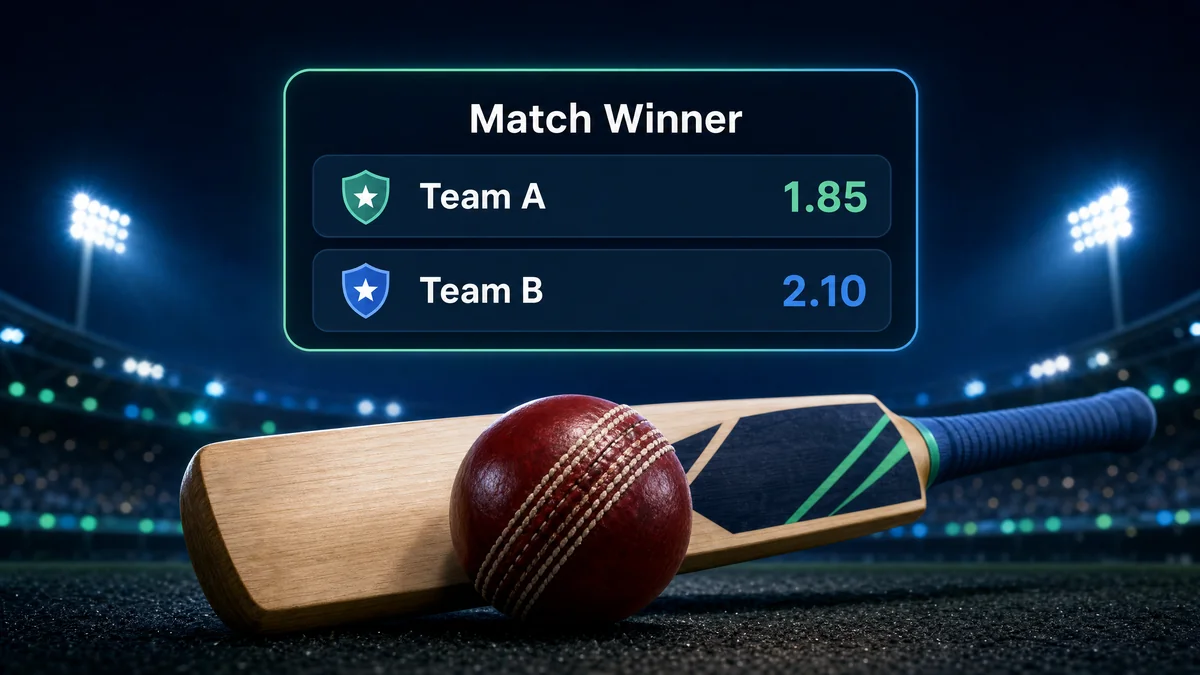
Match Winner
The simplest bet — which team wins, super over included. In a rain-shortened game the Duckworth–Lewis–Stern method decides the result, so always check the reserve-day and minimum-overs rules before you stake.
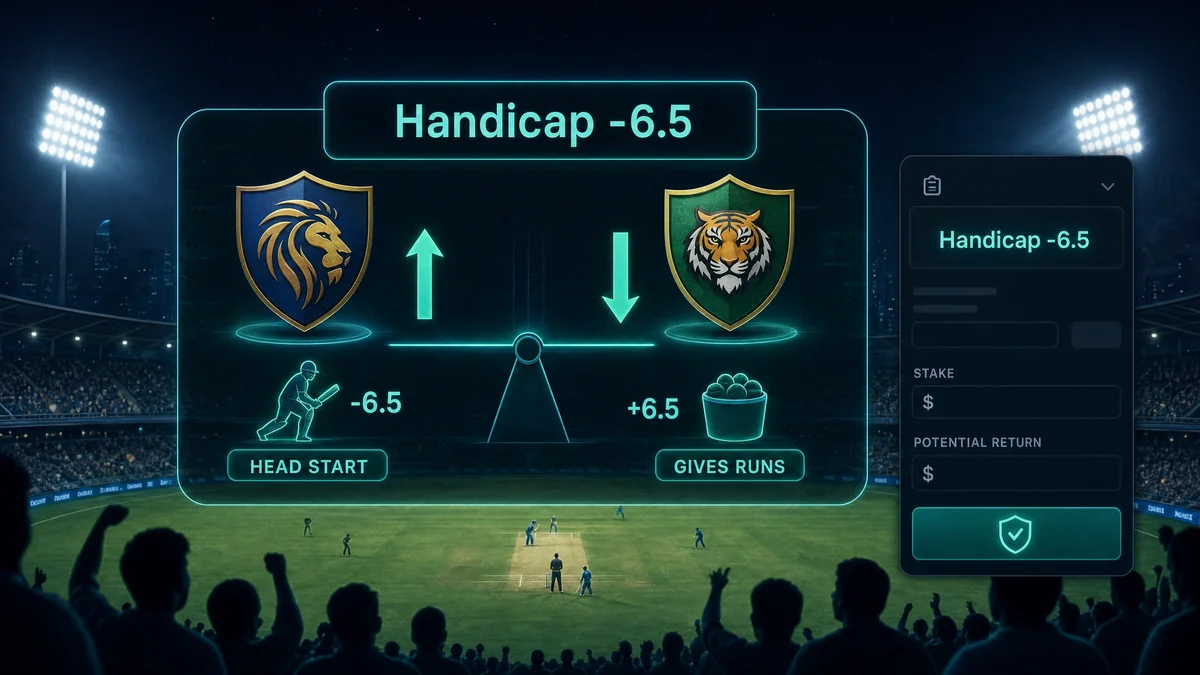
Asian Handicap (run line)
The handicap levels a one-sided match. Say the favourites are −6.5 runs at 1.90: your bet wins only if they win by 7 runs or more. A LKR 1,000 stake returns LKR 1,900 if they clear the line, and loses if they win by six or fewer — or lose outright. It turns a short favourite into a roughly even-money price with more margin for error than the outright winner.
Total Runs (Over/Under)
Back a team's innings, or the match, above or below a set line — for example the batting side Over 165.5. Read the venue and the powerplay before you commit: a Dambulla pitch and a flying start push totals up, a Premadasa grind drags them down.
Top Batsman / Top Bowler
Pick the highest scorer or leading wicket-taker in a team. Openers face the most deliveries, so they carry a quiet edge for top batsman; for top bowler, favour the seamers who take the new ball and bowl at the death.
Fancy markets
Runs in the next over, method of dismissal, a fifty or hundred to be scored, the toss. They are fun and keep you in every ball, but most are close to random — keep them to a small slice of your stake.
Outright (Tournament Winner)
Back a franchise to lift the trophy. Prices drift and shorten with every result, so an early bet on a well-drafted side can lock in value before the market catches up.
Reading the odds — an LKR example
1xBet shows decimal odds by default, and the maths is one line: stake × odds = total return. A price of 1.90 implies roughly a 53% chance (1 ÷ 1.90), and a LKR 500 bet at 1.90 returns LKR 950 — your LKR 500 back plus LKR 450 profit. Anything shorter than about 1.90 means the book rates the outcome more likely than a coin flip; anything longer, less. Comparing the implied chance with your own read of the game is where value bets come from.
Live (in-play) betting
T20 prices never sit still. A side 45 for 0 after the powerplay shortens in seconds; two quick wickets and it drifts just as fast. Studies of big cricket-odds swings put most of them in the first six overs or right after a key wicket — which is exactly where an in-play bettor watching the match can beat a pre-match line. Use cash-out to bank a green position when a chase looks won but not settled, and remember the dew: once it arrives, the chasing side is usually the play.
Ready to put it into practice? Open the live LPL card and compare prices before the toss.
See LPL marketsConditions that move the price
- Toss and dew. Under lights, the toss-winner will usually bowl first to chase in the dew. That single call can be worth several points of price.
- Rain and DLS. Sri Lanka's tropical evenings bring sudden showers; a revised target under DLS often favours the big-hitting side. Know the reserve-day rules.
- Pitch wear. Second innings at Premadasa grips more for spin — factor it into totals and chase markets.
- Team news. A rested overseas star or an injured death bowler changes a side's ceiling. Check the XI at the toss, not the day before.
Six tips for smarter LPL betting
- Wait for the toss. On a dew night the bat-or-bowl call reshapes the winner and totals markets — patience is an edge.
- Respect the powerplay. Most T20 value is decided inside the first six overs; let it play before you commit big.
- Bet the venue, not the badge. The same total is cheap at Dambulla and dear at Premadasa. Price the pitch first.
- Go small on fancy markets. Runs-in-the-over is near-random; treat it as entertainment money.
- Shop the top-batsman market. A settled opener usually offers the best mix of price and balls faced.
- Keep a record. Sharp bettors log every stake and review it — it exposes your biases and the markets you actually beat.
Staking sensibly in LKR
Set a session budget before the first ball and stake a fixed 1–2% of it per bet. On a LKR 10,000 bankroll that is LKR 100–200 a selection. Flat staking stops a bad night becoming a bad month and kills the most expensive habit in cricket betting — doubling up to chase a loss. When the budget is gone, the night is over; there is always another match.
How to start betting the LPL
- Create an account and set your currency to LKR so every price and balance shows in rupees.
- Make a first deposit with a local method — eZ Cash or FriMi clear in seconds.
- Open the LPL section and find the match you want to bet.
- Add a selection to the bet slip, enter your stake, and confirm before the toss for the settled pre-match price.
Frequently asked questions
Is LPL betting legal in Sri Lanka?
Sri Lanka is a legal gray zone. No law criminalises individual online betting, and the Gambling Regulatory Authority Act of 2025 is still being rolled out. Most Sri Lankans bet with offshore, Curaçao-licensed operators. Play responsibly and only with money you can afford to lose.
What is the best LPL market for beginners?
Match Winner. It needs no in-play trading and settles on one clear outcome. Add Total Runs (Over/Under) once you are comfortable reading a powerplay start and the venue.
How does the Asian handicap work in cricket?
It gives one side a head start or deficit in runs. At −6.5, your team must win by 7 or more for the bet to land; at +6.5, it can lose by up to six and still win your bet. The handicap turns a lopsided price into something closer to even money.
Which LPL venue scores highest?
Rangiri Dambulla and Pallekele tend to be the higher-scoring grounds, while R. Premadasa in Colombo is slower and grips for spin later, which usually keeps totals down.
Can I bet on the LPL live, ball by ball?
Yes. In-play markets update over by over and some books price individual deliveries. Live betting suits anyone watching the match; if you cannot watch, stick to a pre-match bet.
How does dew affect LPL betting?
Evening dew makes the ball skid onto the bat and harder to grip, favouring the team batting second. Chasing sides are often shorter in price once dew sets in, and captains usually choose to bowl first after winning the toss under lights.
How much should I stake on an LPL bet?
A fixed 1–2% of a set bankroll per bet. On LKR 10,000 that is LKR 100–200. Flat staking protects you from chasing losses and keeps the tournament fun across all its matches.
Read next
How to Bet on Cricket in Sri Lanka: Beginner's Guide
Formats, the markets that matter, decimal odds and placing your first bet in LKR.
Asian Handicap in Cricket Explained (LKR Examples)
How the run handicap works, why .5 lines remove the tie, and worked LKR examples.

LPL 2026 Final: Odds, Key Markets & How to Bet
Match winner, top batter and total-sixes prices for the final, plus in-play tips.